'/%3e%3ccircle%20cx='520'%20cy='70'%20r='120'%20fill='%237c3aed'%20opacity='0.10'/%3e%3ccircle%20cx='110'%20cy='330'%20r='160'%20fill='%237c3aed'%20opacity='0.07'/%3e%3crect%20x='0'%20y='72'%20width='640'%20height='10'%20fill='%237c3aed'%20opacity='0.10'/%3e%3c/svg%3e)
A lot of companies hear “appointment setting” and think it simply means sending emails and putting meetings on a calendar.
It isn't that simple.
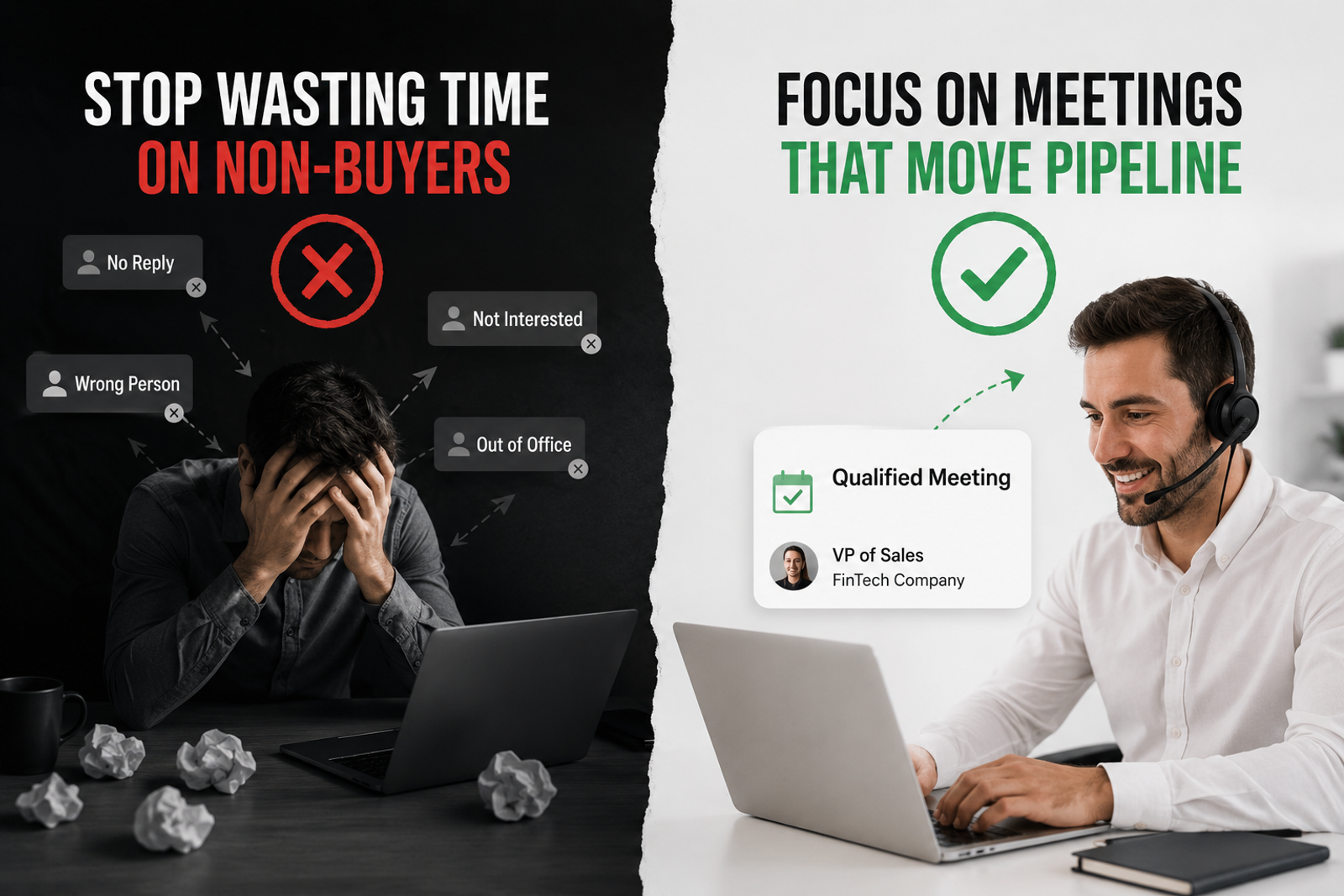
A good B2B appointment setting agency is responsible for much more than booking a time on someone's calendar. The real job is to find the right prospects, get their attention, understand whether there is a potential fit, and create a reason for them to speak with your sales team.
What does a B2B appointment setting agency do?
The exact process varies between agencies, but it usually includes several steps.
1. Find the right prospects
The first step is identifying companies that could actually be a good fit for your product or service.
This can involve looking at things such as:
- Industry
- Company size
- Location
- Job title
- Business model
- Current needs
- Buying signals
Getting this part wrong creates a lot of wasted outreach.
A large list of random companies is not the same thing as a useful prospect list.
2. Reach out to prospects
Once the target prospects are identified, the agency starts conversations through channels such as email, LinkedIn, phone, or a combination of them.
The goal isn't simply to contact as many people as possible.
The goal is to get the right people interested enough to have a conversation.
That usually requires relevant messaging rather than sending the same generic pitch to everyone.
3. Follow up
Most prospects won't respond to the first message.
Appointment setting therefore involves follow-up.
The agency may continue the conversation, answer basic questions, and look for signs that the prospect has a real reason to talk.
Without follow-up, a large amount of potential interest can simply disappear.
4. Qualify the prospect
This is one of the most important parts of appointment setting.
A meeting has little value if the person attending has no need for the product, no authority to make a decision, or no reason to buy.
A qualification process might look at:
- Whether the company fits the target market
- Whether the prospect has a relevant problem
- Whether the prospect is interested in solving it
- Whether the person is involved in the buying process
- Whether there is a reasonable reason for a sales conversation
The exact criteria should be agreed between the business and the agency before outreach begins.
5. Book the meeting
Once a prospect is genuinely interested and meets the agreed criteria, the agency schedules the sales meeting.
This is the visible part of appointment setting, but it is only the final step in the process.
A booked meeting without proper qualification can create a misleading impression of performance.
6. Hand the opportunity to the sales team
The appointment setter normally isn't responsible for closing the deal.
Their job is to create a qualified opportunity and get the prospect into a conversation with the appropriate sales person.
The sales team then takes over the later stages of the sales process.
#What makes a meeting “qualified”?
This is where businesses should pay close attention.
Different agencies can use the word “qualified” to mean completely different things.
For one agency, a qualified meeting might simply mean that someone agreed to a call.
For another, it might require the prospect to match a target company profile, have a relevant business need, and confirm genuine interest in discussing the product.
Before hiring an appointment setting agency, ask exactly what counts as a qualified meeting.
That definition is more important than the number of meetings promised.
#What an appointment setting agency does not guarantee
Appointment setting should not be confused with closing sales.
An agency can generate qualified conversations, but the final sale can still depend on your product, pricing, sales process, offer, competition, and ability to close.
That means a useful agreement should clearly separate:
Meetings booked → Meetings held → Qualified opportunities → Closed sales
These are different outcomes.
#When does it make sense to use an appointment setting agency?
An agency can make sense when a company already knows who its target customers are but doesn't want to build the entire outbound sales operation internally.
It can also be useful when a company wants to test outbound sales, enter a new market, or create more sales conversations without immediately hiring and managing a full SDR team.
It makes less sense when the target customer is unclear or the product has not yet shown that people are willing to buy it.
More outreach won't fix a fundamentally weak offer.
#What should you ask before hiring one?
Before choosing an agency, ask:
Who are you contacting?
How do you define a qualified meeting?
How do you handle prospects who aren't a fit?
Are you paid for activity, leads, booked meetings, or qualified results?
How do you report performance?
The answers will tell you much more than a promise of “100 meetings per month.”
The goal isn't more meetings
The goal is more useful sales conversations.
A good appointment setting process starts with the right prospects, creates genuine interest, qualifies the opportunity, and puts that prospect in front of the right sales person.
That's what businesses should actually be paying attention to when evaluating a B2B appointment setting agency.

-DLQfbe3o.png)
-11oh3t65.png)
-DwPTbEAW.png)
-BbH369h1.png)